Sunrise Alarms and Wind-Down Routines: Can a Hatch Help You Sleep Better?
Disclosure: StayWellAware may earn a commission if you buy through links on this page, at no extra cost to you. It never affects what we recommend. Read our full disclosure.
Not medical advice. This article is for general information. A sleep gadget is not a treatment for insomnia, sleep apnea, depression or any other medical condition. If you have ongoing trouble sleeping, loud snoring, gasping at night, or heavy daytime sleepiness, talk to your doctor.
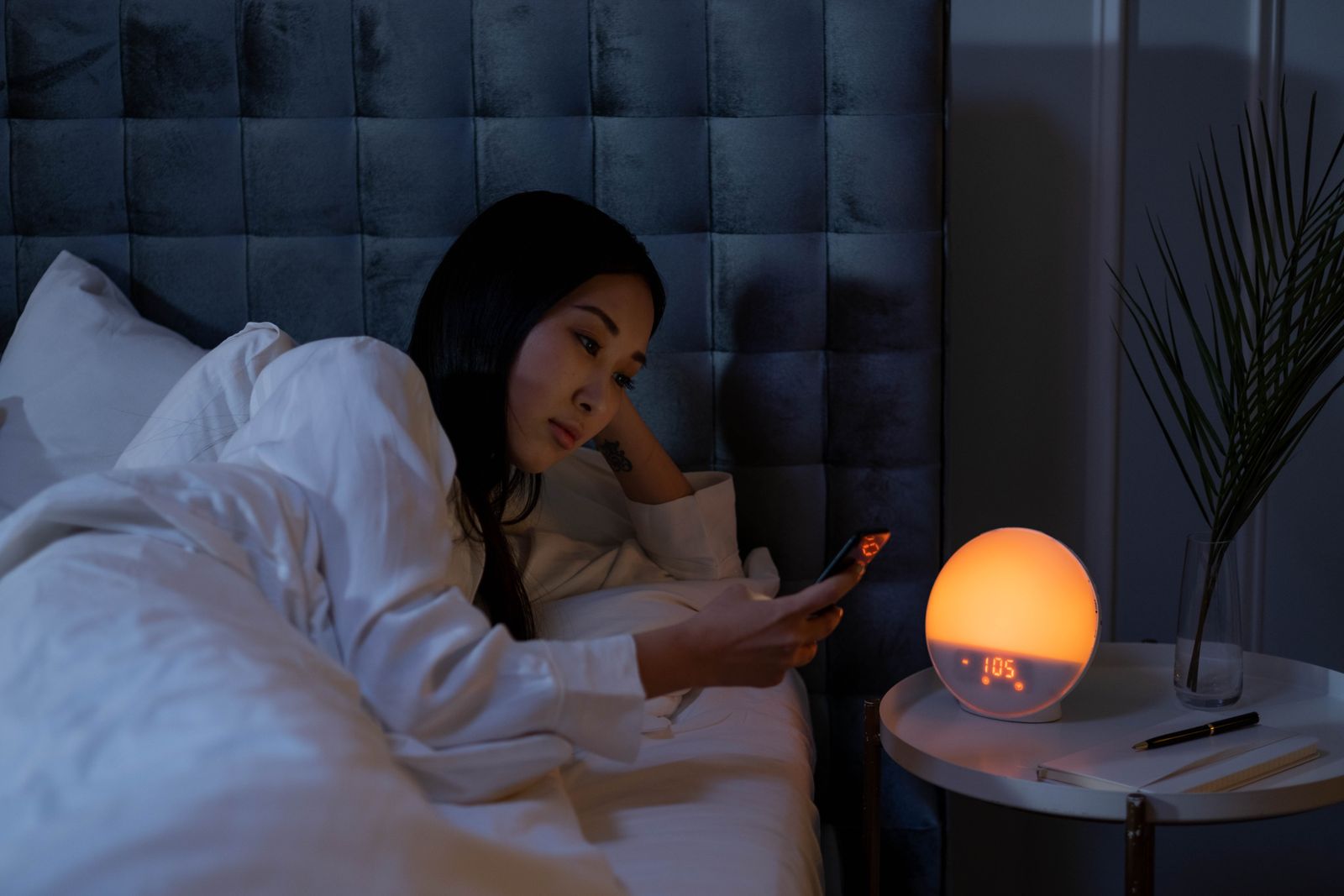
Most of us know the feeling. The alarm goes off in a pitch-dark room, your heart jumps, and you spend the next half hour moving through fog. At night it’s the opposite problem: the phone comes to bed, one more video turns into twenty, and suddenly it’s midnight.
Sunrise alarm clocks promise to fix both ends of the day. The idea is simple. Instead of a jarring beep, the light in your room slowly brightens before your alarm, like a sunrise. At night, the same device dims the lights and plays soft sounds to help you wind down. Hatch is a popular brand, and its Restore line is built around exactly this.
So does it work? The honest answer is that the research on dawn light is small but mildly encouraging for waking up, and the bigger benefit may come from the habits a device like this nudges you toward. Here’s what we found.
The short version
- Evidence level: Limited. A handful of small studies from the Netherlands found that a simulated dawn before waking reduced people’s sense of grogginess (“sleep inertia”) compared with waking in the dark. They did not find clear changes in mental performance tests or in the timing of the body clock.
- Evening light matters. A well-known study found that ordinary room light in the hours before bed suppressed melatonin and delayed its release in nearly everyone tested. Dimming lights at night is a reasonable, low-risk habit.
- Sound machines have weak evidence. A 2021 systematic review rated the evidence that continuous noise improves sleep as very low quality.
- The routine is the real tool. The NIH’s sleep guidance stresses a steady schedule, a quiet hour before bed, and a cool, dark, quiet bedroom. A device can help you stick with that, but it can’t do it for you.
- If you have chronic insomnia, the first-line treatment recommended by the American College of Physicians is cognitive behavioral therapy for insomnia (CBT-I), not a gadget.
How sunrise alarms are supposed to work
Light is one of the main signals your internal body clock uses to stay in step with the day (Harvard Health). Daylight keeps the clock aligned, and light late in the evening can throw it off. Sunrise alarms try to use the morning half of that: by brightening gradually during the last stretch of sleep, they aim to ease you toward waking so the alarm itself feels less like a shock.
The wind-down half works in reverse. Warm, dim light and a predictable routine signal that the day is ending. Many devices, Hatch included, pair this with sounds such as white noise, nature recordings or guided content.
What the research says about dawn light
The Groningen studies
The best-known research comes from a group at the University of Groningen in the Netherlands.
In one home study published in Chronobiology International in 2010, people who had trouble waking early used an alarm clock with artificial dawn for two-week stretches, compared with periods without it (PubMed). Using the dawn light significantly reduced their complaints of sleep inertia, that groggy, heavy feeling after waking. Interestingly, the researchers found no significant shift in the timing of melatonin, a marker of the body clock. They concluded something other than a clock shift must explain the effect.
A second, smaller lab study in the Journal of Sleep Research tested 16 healthy people who said they had difficulty waking up (PubMed). After a night with 30 minutes of artificial dawn before their alarm, people rated themselves less sleepy and more alert than after a control night. But the dawn light made no significant difference to their scores on reaction-time and math tasks, or to their cortisol levels. The authors suggested the benefit may come from lighter sleep in the final half hour and changes in skin temperature after waking.
Dawn simulation and winter depression
An older trial, published in 2002, looked at 50 people with seasonal affective disorder (winter depression) who also slept too much (PubMed). One week of dawn simulation reduced morning drowsiness and difficulty waking compared with a very dim placebo light. The authors themselves noted the result needed to be repeated. And if you think you might have seasonal depression, that’s a reason to see a clinician, not to self-treat with a clock.
What this adds up to
Put together, these studies suggest that waking with gradual light may make mornings feel easier for some people, at least in the short term. They’re small, they mostly measured how people felt rather than how they performed, and none of them tested a Hatch device specifically. That’s a “might help, unlikely to hurt” result, not proof.
Evening light, screens and sound
Dimming the lights
There’s stronger evidence that bright evening light affects the body clock. In a study of 116 healthy young adults living in a research center, exposure to ordinary room light (under 200 lux) in the hours before bedtime suppressed melatonin, delaying its onset in 99% of people and shortening its duration by about 90 minutes compared with dim light (PubMed).
Harvard Health Publishing adds that even dim light can affect circadian rhythm and melatonin, and that blue wavelengths from screens and energy-efficient bulbs seem to be the most disruptive at night (Harvard Health). The NIH’s National Heart, Lung, and Blood Institute similarly advises avoiding bright artificial light, such as from a TV or computer screen, in the hour before bed (NHLBI).
A dim, warm bedside light that you can set to fade out is one easy way to act on this. So is simply turning off overhead lights and putting the phone down earlier. Neither requires a purchase.
White noise and sound machines
Sound is a big part of devices like the Hatch Restore, and many people love it. But the evidence is thinner than you might expect. A 2021 systematic review in Sleep Medicine Reviews looked at 38 studies of continuous white noise or similar sound and sleep (PubMed). Results were all over the place, from noise improving sleep to noise disrupting it. Using standard grading methods, the reviewers rated the quality of evidence that continuous noise improves sleep as very low, and cautioned that it may also affect sleep and hearing.
That doesn’t mean sound can’t help you personally, especially if it masks traffic or a snoring partner. It means you should keep the volume modest and judge it by how you actually sleep.
What a Hatch Restore offers
Hatch describes its Restore 3 as a smart sleep clock designed to help you build “gentle, phone-free sleep routines” (Hatch). Based on the product page, here’s what to know before you look:
- Sunrise alarm and wind-down features are central to the device, combining light and sound.
- Hatch+ membership. Hatch offers a paid membership called Hatch+, and the Restore 3 page says 30 days are included. Hatch’s own FAQ addresses whether the Restore works without a subscription. Read that answer, and check which sounds and routines need the membership, before you buy, so you know the true ongoing cost.
- Trial and warranty. At the time we checked, the Restore 3 page listed a 30-night bedside trial and a 1-year product warranty. Policies change, so confirm them at checkout.
- Customer reviews. The page shows an AI-generated summary of customer reviews. That’s marketing material, not independent testing, and we’d read individual reviews, including the critical ones, rather than the summary.
We haven’t tested a Hatch Restore ourselves for this article, and we can’t tell you it will improve your sleep. What we can say is that its core features line up with sensible habits: dim light at night, gradual light in the morning, and a routine that doesn’t depend on your phone.
[Check current price at Hatch]
Prices, features and membership terms change. Check the current details on Hatch’s site before you buy.
Who might get the most out of one
A sunrise alarm and wind-down device may be worth considering if you:
- wake up before sunrise for much of the year and hate the shock of a dark-room alarm
- want to keep your phone out of the bedroom but need something to replace its alarm and sounds
- like the structure of a set routine and respond well to cues
- share a room and want a softer wake-up than a loud alarm
It’s probably not worth it if you already sleep well with a basic alarm, if bright light at bedtime isn’t part of your routine, or if your sleep problem is something a clock can’t touch, like pain, anxiety, a new medication, or a partner’s snoring.
Building a wind-down routine, with or without a device
The NHLBI’s healthy sleep habits are the backbone here, and none of them cost anything (NHLBI):
- Keep a steady schedule. Go to bed and get up at the same time every day, and keep weekends within about an hour of weekdays.
- Use the hour before bed for quiet time. Skip intense exercise and bright screens.
- Watch caffeine, nicotine and alcohol. NHLBI notes caffeine’s effects can last up to 8 hours, so a late-afternoon coffee can keep you up.
- Avoid heavy meals within a few hours of bedtime. A light snack is fine.
- Get outside and move during the day when you can.
- Keep the bedroom quiet, cool and dark. A dim night light is fine if you need one.
- Try a warm bath or relaxation techniques before bed.
If you buy a sunrise alarm, set it up to support these steps. Use the wind-down light as your cue to put screens away, keep the alarm time consistent through the week, and put your phone to charge in another room.
When a gadget isn’t the answer
Please talk to a clinician rather than buying more gear if:
- you’ve had trouble falling or staying asleep most nights for several weeks
- you snore loudly, gasp or stop breathing during sleep, or wake with headaches
- you’re very sleepy during the day, especially while driving
- your sleep problems came with low mood, anxiety, pain or a new medicine
For chronic insomnia, the American College of Physicians recommends CBT-I as the initial treatment for adults (PubMed). It’s a structured program that works on sleep timing, habits and the racing thoughts that keep people awake, and it’s available through therapists, clinics and digital programs.
The bottom line
A sunrise alarm like the Hatch Restore won’t cure poor sleep, and the research behind dawn light is small. But it suggests a gentler, light-based wake-up may make mornings feel less groggy for some people, and there’s good reason to keep evenings dim and screen-free. If a device helps you keep a steady schedule and leave your phone out of the bedroom, it may be money well spent. If you’re struggling with real insomnia, start with your doctor and ask about CBT-I.
Sources
- Giménez MC, et al. Effects of artificial dawn on subjective ratings of sleep inertia and dim light melatonin onset. Chronobiol Int. 2010;27(6):1219-41. https://pubmed.ncbi.nlm.nih.gov/20653451/
- Van De Werken M, et al. Effects of artificial dawn on sleep inertia, skin temperature, and the awakening cortisol response. J Sleep Res. 2010;19(3):425-35. https://pubmed.ncbi.nlm.nih.gov/20408928/
- Avery DH, et al. Is dawn simulation effective in ameliorating the difficulty awakening in seasonal affective disorder associated with hypersomnia? J Affect Disord. 2002;69(1-3):231-6. https://pubmed.ncbi.nlm.nih.gov/12103471/
- Gooley JJ, et al. Exposure to room light before bedtime suppresses melatonin onset and shortens melatonin duration in humans. J Clin Endocrinol Metab. 2011;96(3):E463-72. https://pubmed.ncbi.nlm.nih.gov/21193540/
- Riedy SM, et al. Noise as a sleep aid: A systematic review. Sleep Med Rev. 2021;55:101385. https://pubmed.ncbi.nlm.nih.gov/33007706/
- Qaseem A, et al. Management of Chronic Insomnia Disorder in Adults: A Clinical Practice Guideline From the American College of Physicians. Ann Intern Med. 2016;165(2):125-33. https://pubmed.ncbi.nlm.nih.gov/27136449/
- National Heart, Lung, and Blood Institute. Healthy Sleep Habits. https://www.nhlbi.nih.gov/health/sleep-deprivation/healthy-sleep-habits
- Harvard Health Publishing. Blue light has a dark side. https://www.health.harvard.edu/staying-healthy/blue-light-has-a-dark-side
- Hatch. Restore 3. https://www.hatch.co/restore
Written by Mbatia Tony Muitungu. Read how we research and update articles in our Editorial Policy.