Vitamin D3 and Its Cofactors: Magnesium, K2, Boron, Zinc, Calcium, and Vitamin A, and What the Research Really Shows
Disclosure: StayWellAware may earn a commission if you buy through links on this page, at no extra cost to you. It never affects what we recommend. Read our full disclosure.
Not medical advice. This guide is for general information. Talk to your doctor, pharmacist, or other clinician before combining vitamin D with magnesium, vitamin K, boron, zinc, calcium, or vitamin A, especially if you have kidney disease, a history of kidney stones, high blood calcium, sarcoidosis or another condition that affects calcium, or if you are pregnant or breastfeeding. If you take warfarin (Coumadin, Jantoven) or another vitamin K antagonist, do not start, stop, or change a vitamin K supplement without talking to the clinician who manages your INR. If you take thiazide diuretics, statins, steroids such as prednisone, orlistat, lithium, levothyroxine, or medicines for bone loss, ask before adding vitamin D, calcium, or magnesium.
Spend ten minutes in any online supplement forum and you will meet the “D3 stack”. The advice goes something like this: never take vitamin D3 on its own. Add vitamin K2 so the calcium goes to your bones and not your arteries. Add magnesium because your body cannot use vitamin D without it. Some people add boron, which is said to make vitamin D last longer, and zinc, because the vitamin D receptor is built around zinc. Others warn that vitamin A cancels vitamin D, or that you need vitamin A to keep vitamin D safe.
Some of this rests on solid biology, some on a single small study or a rat experiment, and some on large trials with results less exciting than the forums suggest.
We wanted to answer one direct question first: has anyone actually studied vitamin D3, magnesium, vitamin K, boron, and zinc together? Then we looked at each pairing on its own: D with magnesium, D with K2, D with boron, D with zinc, D with calcium, D with vitamin A, and D with omega-3 fats. For each, we graded the evidence and explained what it does and does not show.
If you want background on vitamin D itself, start with our guide on vitamin D supplements: who may need one and how to choose. This article is about the company vitamin D keeps.
The short version
- No trial has tested vitamin D3, magnesium, vitamin K, boron, and zinc together. We searched PubMed on November 1, 2026 and found none. The “cofactor stack” is built by joining separate pair studies, not from one tested protocol.
- The closest match is a Dutch trial from 2003. It gave postmenopausal women calcium, magnesium, zinc, and vitamin D, with or without vitamin K1, for three years. Only the group that also got vitamin K1 had less bone loss at the hip than placebo (Braam et al., 2003; Braam, 2002 (thesis)).
- Several Iranian trials combined magnesium, zinc, calcium, and vitamin D. Two of them have since been retracted over integrity concerns, and a third was corrected (Maktabi et al., 2023; Appl Physiol Nutr Metab, 2025 (retraction); Jamilian et al., 2022).
- Magnesium and vitamin D work together in the body. The enzymes that handle vitamin D appear to need magnesium, and in a US trial magnesium raised low-to-middling vitamin D levels but lowered high ones (Uwitonze & Razzaque, 2018; Dai et al., 2018).
- Vitamin D and vitamin K2 together improve a marker of vitamin K status, but results on bones and arteries are mixed. A 2026 Danish trial found the pair slowed the build-up of calcium in heart arteries in people who already had a lot of it, while an earlier trial found no effect on the aortic valve (Hasific et al., 2026; Diederichsen et al., 2022).
- Boron’s link to vitamin D rests mostly on animal studies and a few tiny human reports (Hunt et al., 1994; Naghii et al., 2011).
- The vitamin D receptor contains zinc, but human trials of the pair are few and show no clear partnership (Craig et al., 1997; Yosaee et al., 2020).
- Calcium plus vitamin D only modestly affected hip fractures in a huge US trial, raised kidney stone risk, and is still debated for heart risk (Jackson et al., 2006; Bolland et al., 2011; Kopecky et al., 2016).
- Too much preformed vitamin A may work against vitamin D. It blunted vitamin D’s calcium effect in a small human study and was linked to more hip fractures in large cohorts (Johansson & Melhus, 2001; Feskanich et al., 2002).
- Stay within official upper limits for every nutrient in the stack. For adults in the US, that means 4,000 IU of vitamin D, 350 mg of supplemental magnesium, 40 mg of zinc, 20 mg of boron, and 3,000 mcg of preformed vitamin A a day (NIH ODS, Vitamin D; NIH ODS, Magnesium; NIH ODS, Zinc; NIH ODS, Boron; NIH ODS, Vitamin A).
Has anyone studied D3, magnesium, K2, boron, and zinc together?
This was the user question that started this article, so we gave it a careful search. On November 1, 2026, we ran PubMed searches combining vitamin D with magnesium, vitamin K, zinc, and boron in different groupings of three or more, including “cofactor” and “co-supplementation” terms. We also searched Europe PMC for every randomized trial with both “zinc” and “vitamin D” in the title. Here is what exists.
No trial of all five
We found no human trial, of any size, that gave vitamin D3 together with magnesium, vitamin K, boron, and zinc. We also found no human trial that combined vitamin D and boron with any other nutrient on this list. The full five-part stack has not been tested as a package. When a product or a post says the combination is “proven”, it is joining dots between separate studies.
The closest: a Dutch trial of minerals, vitamin D, and vitamin K1
The nearest thing to the stack is a three-year trial from Maastricht in the Netherlands, published in 2003 (Braam et al., 2003). Researchers randomly assigned 181 healthy women aged 50 to 60, all past menopause, to one of three daily supplements:
- a placebo
- a mineral and vitamin D supplement with 500 mg calcium, 150 mg magnesium, 10 mg zinc, and 8 mcg (320 IU) vitamin D3
- the same supplement plus 1 mg of vitamin K1
The doses come from the lead author’s doctoral thesis, which describes the trial in full (Braam, 2002 (thesis)). Of the 181 women, 155 finished.
After three years, the group that also took vitamin K1 lost less bone at the femoral neck, the top of the thigh bone where hip fractures happen. The difference was 1.7% compared with placebo and 1.3% compared with the minerals-plus-D group. There was no difference at the lower spine (Braam et al., 2003). The thesis notes that the minerals-plus-D supplement slowed bone loss only for the first year; the extra benefit over time came with vitamin K1 added (Braam, 2002 (thesis)).
The same trial also measured the elasticity of the carotid artery in the neck. In 108 women with usable scans, the artery stayed as elastic as it was at the start in the vitamin K1 group, but stiffened in the minerals-plus-D and placebo groups (Braam et al., 2004).
Three cautions apply: it used vitamin K1, not K2; its vitamin D dose was low by today’s standards; and it measured bone density and artery stiffness, not fractures or heart attacks.
A Spanish dairy drink with eight added nutrients
In a 2020 Spanish trial, 78 women around menopause who were at risk of osteoporosis drank a yogurt-like dairy product every day for 24 weeks. Half got a version enriched with calcium, vitamin D, vitamin K, vitamin C, zinc, magnesium, the amino acid leucine, and a probiotic. The others got the same drink without the extras. The enriched group kept its bone mineral density, while the control group lost some, and bone-building markers moved in a favorable direction (Morato-Martínez et al., 2020). With eight added ingredients in a food, there is no way to tell which ones mattered.
The Iranian magnesium, zinc, calcium, and vitamin D trials
Between 2017 and 2019, a group of Iranian researchers published at least four small trials of a combined magnesium, zinc, calcium, and vitamin D supplement. They tested it in women with polycystic ovary syndrome (PCOS) and in women with diabetes in pregnancy. One version gave 100 mg magnesium, 4 mg zinc, 400 mg calcium, and 200 IU vitamin D twice a day for 12 weeks (Jamilian et al., 2017). The papers reported better insulin and blood fat numbers, and lower markers of inflammation (Jamilian et al., 2017; Jamilian et al., 2019).
These trials are often quoted as proof that the “mineral stack” works. Their record since publication tells a different story:
- The PCOS hormone and inflammation paper was retracted in 2022. Editors found it overlapped with another paper on the same participants without saying so, left out the metformin the women were taking, and misreported how many people took part. They judged the conclusions unreliable; two authors disagreed (Maktabi et al., 2023; Maktabi et al., 2018).
- The gestational diabetes blood sugar paper was retracted in 2025. Editors found that recruitment began before ethics approval, that the trial registration was changed in 2019, and that some participants had conditions at the start that could affect the results. The corresponding author disagreed (Appl Physiol Nutr Metab, 2025 (retraction); Karamali et al., 2018).
- The PCOS blood sugar paper carries a published correction (Jamilian et al., 2022).
- A fourth paper, on inflammation and pregnancy outcomes in gestational diabetes, was not marked as retracted when we checked (Jamilian et al., 2019).
We do not rely on these trials in this article. We mention them because they still circulate, and readers deserve to know their status.
Two-nutrient trials and reviews
Everything else tests one pair at a time. Several reviews argue that magnesium, vitamin K, boron, and other nutrients matter for bone alongside vitamin D and calcium (Price et al., 2012; Palacios, 2006; Zofkova et al., 2017), but reviews are not trials.
The honest answer: the cofactor stack is a reasonable idea built from biology and pair studies. It has not been tested as a whole. The sections below go through each pair.
Quick glance: each pairing
| Pairing | What it may do | Evidence strength |
|---|---|---|
| Vitamin D3 + magnesium | Magnesium helps run the enzymes that activate and break down vitamin D. Supplements may raise low vitamin D levels and lower high ones. | Moderate (vitamin D levels); Limited (health outcomes) |
| Vitamin D3 + vitamin K2 | K2 activates osteocalcin and matrix Gla protein, two proteins that handle calcium. The pair may slow artery calcium build-up in people who already have a lot of it. | Moderate (vitamin K status markers); Limited (bones and arteries) |
| Vitamin D3 + boron | Boron may slow the breakdown of vitamin D. | Weak |
| Vitamin D3 + zinc | Zinc is part of the vitamin D receptor’s structure. Trials have not shown a clear benefit from taking both. | Limited |
| Vitamin D3 + calcium | A small gain in bone density, mixed results for fractures, and more kidney stones in the WHI trial. | Strong (bone density); Moderate (fractures); Limited (heart risk) |
| Vitamin D3 + vitamin A | High doses of preformed vitamin A may blunt vitamin D’s effect on calcium. | Limited (direct effect in humans); Moderate (observational fracture link) |
| Vitamin D3 + omega-3 fats | Did not prevent cancer, heart disease, or fractures in the VITAL trial. | Moderate |
A quick primer: how vitamin D works
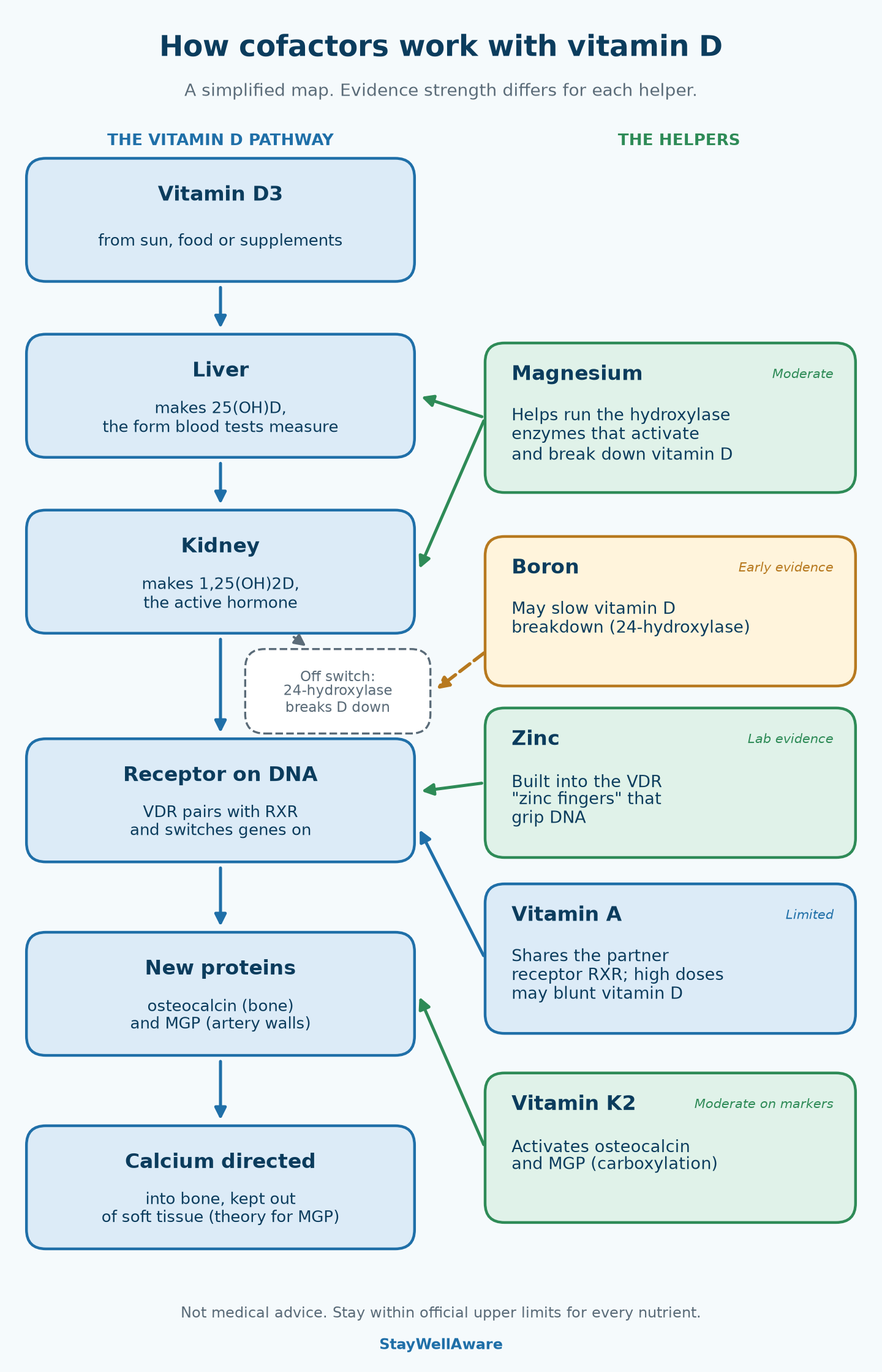
To see where each helper might fit, it helps to know the basic path vitamin D takes.
- Making or eating it. Your skin makes vitamin D3 when ultraviolet light hits it. You also get D3 or D2 from food and supplements. In this form, vitamin D is inactive (NIH ODS, Vitamin D).
- First activation, in the liver. The liver converts vitamin D to 25-hydroxyvitamin D, or 25(OH)D. This is the form blood tests measure (NIH ODS, Vitamin D).
- Second activation, mostly in the kidneys. The kidneys convert 25(OH)D into 1,25-dihydroxyvitamin D, the active hormone (NIH ODS, Vitamin D).
- Switching genes on and off. The active hormone binds the vitamin D receptor (VDR) inside cells. The receptor pairs up with a partner called the retinoid X receptor (RXR) and attaches to DNA to control genes. Those genes include ones for calcium absorption in the gut and for the bone protein osteocalcin (Haussler et al., 2013).
- Breaking it down. An enzyme called 24-hydroxylase starts the breakdown of vitamin D, making a product called 24,25-dihydroxyvitamin D (Miljkovic et al., 2004; Dai et al., 2018).
Magnesium is linked to the enzymes in steps 2, 3, and 5. Zinc is part of the receptor in step 4, where vitamin A’s family also acts through the partner receptor. Boron is proposed to slow step 5. Vitamin K does not change vitamin D itself; it activates some of the proteins vitamin D tells cells to make, such as osteocalcin and matrix Gla protein (Braam et al., 2004; NIH ODS, Vitamin K).
Vitamin D and magnesium — Evidence: Moderate (for an effect on vitamin D levels); Limited (for health outcomes)
Of all the pairings in this article, magnesium and vitamin D have the clearest biological link. For a deeper look at magnesium on its own, see our guide on magnesium for sleep and what the research actually shows.
The biology
Magnesium helps run the enzymes that activate vitamin D in the liver and kidneys. A 2018 review in the Journal of the American Osteopathic Association summed it up this way: all of the enzymes that metabolize vitamin D seem to require magnesium (Uwitonze & Razzaque, 2018). The authors of the 2018 Vanderbilt trial described below explain that both the enzyme that makes active vitamin D (1-alpha-hydroxylase) and the enzyme that starts its breakdown (24-hydroxylase) have been shown to depend on magnesium in lab and animal studies (Dai et al., 2018).
Magnesium also affects parathyroid hormone (PTH), the main hormone that controls blood calcium and tells the kidneys to make active vitamin D (NIH ODS, Magnesium). In a 1991 study, 26 healthy volunteers ate a low-magnesium diet for three weeks. Their active vitamin D fell from 55 to 43 pmol/L, and their PTH response was impaired (Fatemi et al., 1991).
There is also a rare condition, first described in the 1970s, called magnesium-dependent vitamin D-resistant rickets (Reddy & Sivakumar, 1974). Children with it did not respond well to vitamin D, and magnesium supplementation substantially reversed that resistance (Deng et al., 2013).
What the observational research shows
The best-known population study used data from the US National Health and Nutrition Examination Survey (NHANES). People with higher magnesium intake were less likely to have low vitamin D levels. Magnesium intake also appeared to interact with vitamin D intake, and the link between vitamin D levels and death rates showed up mainly in people whose magnesium intake was above the median (Deng et al., 2013). This kind of study shows associations, not cause and effect.
Magnesium shortfalls are common. According to NHANES data quoted in the Vanderbilt trial, 79% of US adults do not meet the Recommended Dietary Allowance (RDA) for magnesium (Dai et al., 2018). A 2016 review noted that between 1977 and 2012, US calcium intake rose two to two and a half times faster than magnesium intake. The authors proposed that a dietary calcium-to-magnesium ratio around 2.0 may be ideal, and that ratios below 1.7 or above 2.8 may be harmful (Rosanoff et al., 2016). That ratio idea is a proposal from reviewing older data, not a tested target.
The trials
The Vanderbilt trial (2018). This was a carefully designed study nested inside a larger colorectal cancer prevention trial. It included 180 adults aged 40 to 85 who ate plenty of calcium relative to magnesium. Each person’s magnesium dose was set to bring their calcium-to-magnesium intake ratio down to about 2.3 (Dai et al., 2018).
The results were not simple. Magnesium raised blood vitamin D (25(OH)D) in people who started around 30 ng/mL, but lowered it in people who started higher, between about 30 and 50 ng/mL. It also affected the vitamin D breakdown product 24,25-dihydroxyvitamin D in people starting near 50 ng/mL (Dai et al., 2018). The researchers concluded that good magnesium status may be important for keeping vitamin D in a healthy range. In other words, magnesium seemed to act more like a regulator than a booster.
A trial in adults with overweight or obesity (2022). In a 12-week trial, 95 adults took vitamin D3 with 360 mg of magnesium glycinate, vitamin D3 alone, or a placebo. The combination raised 25(OH)D the most, by about 6.3 ng/mL. Systolic blood pressure fell by 7.5 mmHg in the subgroup who started with readings above 132. The combination did not change PTH or inflammation markers (Cheung et al., 2022).
A trial on bone and blood sugar markers (2023). A related trial gave 1,000 IU of vitamin D3 with or without 360 mg of magnesium glycinate. Among the 78 people who finished, vitamin D levels rose compared with placebo, but neither treatment changed osteocalcin, blood sugar markers, or bone turnover markers (Dall et al., 2023).
What this means
Magnesium appears to matter for how your body handles vitamin D, and many people fall short of it, so checking your magnesium intake if you take vitamin D is reasonable. The trials have not shown that adding magnesium improves bones, heart health, or other outcomes, and the Vanderbilt results suggest magnesium may pull high vitamin D levels down.
A note on doses: the 360 mg used in two of these trials is slightly above the US upper limit for supplemental magnesium, which is 350 mg a day for adults (NIH ODS, Magnesium). That limit applies only to magnesium from supplements and medicines, not food, and it exists because higher doses commonly cause diarrhea. The European limit is lower, at 250 mg a day of supplemental magnesium (EFSA, 2025). People with kidney disease should not take magnesium supplements without medical advice (NIH ODS, Magnesium).
Vitamin D and vitamin K2 — Evidence: Moderate (for vitamin K status markers); Limited (for bones and arteries, with mixed results)
This is the most popular pairing, and the one with the most research. For background on vitamin K forms, see our vitamin K guide covering K1 and K2.
The biology
Vitamin D tells cells to make several proteins that handle calcium. Two of them matter here. Osteocalcin is made in bone and helps bind calcium into the bone matrix (Haussler et al., 2013). Matrix Gla protein (MGP) is made in blood vessel walls and is a strong inhibitor of calcification there; its production depends on vitamin D (Braam et al., 2004).
Both proteins need vitamin K to work. Vitamin K is a cofactor for an enzyme that adds carboxyl groups to them, a step called carboxylation (NIH ODS, Vitamin K). Without enough vitamin K, they stay “undercarboxylated” and inactive (Braam et al., 2004). So the theory runs: vitamin D makes more of these proteins, and vitamin K switches them on. If vitamin D is high and vitamin K is low, you may have more inactive protein.
That theory is sound as biology. The question is whether supplementing both changes bones or arteries in a meaningful way.
Bones
Japanese trial (2000). In 92 women with osteoporosis, researchers compared alfacalcidol (a prescription form of active vitamin D, not D3), menatetrenone (a drug form of vitamin K2 called MK-4, at 45 mg a day), both together, or calcium. The combination increased bone density at the lower spine more than either alone (Iwamoto et al., 2000). Both were prescription drugs at doses far beyond supplements.
Dutch trial (2003). As described above, adding vitamin K1 to calcium, magnesium, zinc, and vitamin D reduced bone loss at the femoral neck over three years (Braam et al., 2003).
Scottish trial (2007). In 244 women aged 60 and over, researchers compared 200 mcg of vitamin K1, vitamin D3 (400 IU) with calcium (1,000 mg), all three together, or placebo for two years. Only the combined group showed a modest bone density gain, and only at one site at the wrist. Vitamin K1 cut undercarboxylated osteocalcin by about half, and vitamin D raised 25(OH)D and lowered PTH (Bolton-Smith et al., 2007).
Dutch MK-7 trial (2013). In 244 healthy postmenopausal women, 180 mcg of MK-7 alone (no added vitamin D) for three years reduced bone loss at the lower spine and femoral neck, but not the total hip (Knapen et al., 2013).
Danish MK-7 trial (2021). In 142 postmenopausal women with low bone density, all of whom took vitamin D3 (38 mcg, about 1,500 IU) and 800 mg of calcium, adding 375 mcg of MK-7 for three years improved the carboxylation of osteocalcin. It did not change bone density, bone structure, or bone turnover compared with placebo (Rønn et al., 2021).
Meta-analysis (2020). A pooled analysis of eight randomized trials with 971 participants found that vitamin K plus vitamin D modestly increased total bone density and lowered undercarboxylated osteocalcin. The effect looked stronger with vitamin K2 and with vitamin K doses under 500 mcg (Kuang et al., 2020). The trials varied widely in form, dose, and population.
The US Office of Dietary Supplements makes an important point about this research. When vitamin K is given with vitamin D or calcium to the treatment group but not the placebo group, the vitamin D and calcium could explain part of the benefit (NIH ODS, Vitamin K). The Dutch and Scottish trials avoided this problem by including a D-without-K group. Many others did not.
Arteries and the heart
This is where the “K2 keeps calcium out of your arteries” claim lives. The research is mixed, and the newest trial is the most encouraging.
- Dutch trial (2004). As described above, vitamin K1 added to minerals and vitamin D preserved carotid artery elasticity over three years (Braam et al., 2004).
- Dutch MK-7 trial (2015). In the same 244 women from the 2013 bone study, 180 mcg of MK-7 alone reduced a standard measure of aortic stiffness over three years. Several other stiffness measures improved in women who started with stiffer arteries, and inactive MGP fell by half (Knapen et al., 2015).
- Polish kidney disease trial (2015). In 42 people with chronic kidney disease, 90 mcg of MK-7 plus 10 mcg of vitamin D3 for 270 days slowed thickening of the carotid artery wall compared with vitamin D3 alone. It did not significantly change coronary calcium scores (Kurnatowska et al., 2015).
- Dutch diabetes trial (2019 and 2021). In 68 people with type 2 diabetes and heart disease, 360 mcg of MK-7 for six months did not reduce arterial calcification (Zwakenberg et al., 2019; Bartstra et al., 2021).
- AVADEC (2022). In 365 Danish men with an average age of 71 and calcium in the aortic valve, 720 mcg of MK-7 plus 25 mcg (1,000 IU) of vitamin D for two years did not slow valve calcification compared with placebo (Diederichsen et al., 2022). A later analysis in 304 men without known heart disease found no significant overall effect on coronary artery calcium. In men who started with very high scores (400 or more), calcium built up more slowly with the supplement (Hasific et al., 2023). The authors called this hypothesis-generating.
- DANCODE (2026). This Danish trial tested that hypothesis directly. It enrolled 400 people with coronary calcium scores of 400 or more and gave the same MK-7 and vitamin D combination or placebo for two years. Coronary calcium rose by 196 units with the supplement versus 248 with placebo, a difference of 52 units, and the result was consistent across subgroups. The supplement did not increase soft (noncalcified) plaque (Hasific et al., 2026).
DANCODE is the strongest support so far for vitamin K2 plus vitamin D in arteries. It still has limits. It measured calcium on scans, not heart attacks or deaths. It included only people who already had a lot of coronary calcium. And it tested MK-7 with vitamin D, so it cannot say what MK-7 would do alone.
What this means
Vitamin K, alone or with vitamin D, reliably activates more osteocalcin and MGP. Whether that changes bones is unclear: some trials found less bone loss, and the largest recent Danish bone trial did not. For arteries, the 2026 DANCODE trial suggests a slower rise in coronary calcium in people with heavy existing calcification. Nobody has shown fewer heart attacks.
There is no official upper limit for vitamin K, because no harm has been seen from high intakes in healthy people (NIH ODS, Vitamin K). The serious exception is warfarin. Vitamin K directly counteracts warfarin, so people taking it need to keep their vitamin K intake steady and talk with their clinician before taking any vitamin K supplement (NIH ODS, Vitamin K).
Vitamin D and boron — Evidence: Weak (mostly animal studies and tiny human reports)
Boron’s link to vitamin D is one of the most repeated claims in supplement circles. It is also one of the thinnest. For more on boron itself, see our boron guide.
Animal studies
In the late 1980s and 1990s, researchers at the US Department of Agriculture’s Grand Forks center ran a series of animal experiments. In chicks fed too little vitamin D, adding boron brought blood sugar and blood fats back toward normal and improved bone mineral content and growth plate development (Hunt et al., 1994). An earlier chick study found that boron’s effects depended on magnesium and other minerals in the diet (Hunt, 1989). A rat study found that boron changed calcium and mineral handling in vitamin D-deprived rats, with mixed effects: it reduced some abnormal kidney losses in diabetic rats, but increased the breakdown of collagen (Hunt & Herbel, 1991). Later work in chicks and rats found that boron lowered insulin regardless of vitamin D or magnesium status (Bakken & Hunt, 2003).
Human studies
- The 1987 study. Twelve postmenopausal women ate a low-boron diet for about four months, then took 3 mg of boron a day. Their urinary losses of calcium and magnesium fell, and their estrogen and testosterone levels rose. The effect was larger when their magnesium intake was low (Nielsen et al., 1987). This study did not report vitamin D.
- A 1990 study. According to a 2015 review by Lara Pizzorno, a later USDA study had 15 adults eat a low-boron diet for 63 days, then take 3 mg of boron a day for 49 days. Their 25(OH)D rose from 44.9 to 62.4 nmol/L (Pizzorno, 2015). The original paper was published in a journal not indexed in PubMed, and we could not read it directly.
- The 2011 study. Eight healthy men took 10 mg of boron a day for one week. The authors reported that vitamin D, along with dihydrotestosterone and cortisol, rose (Naghii et al., 2011). One week and eight people is a very small test.
- A Serbian pilot. Pizzorno also describes a small open study in which 13 people with very low vitamin D took 6 mg of boron a day for 60 days in autumn and winter, with a reported rise in vitamin D of about 20% (Pizzorno, 2015). We could not find or verify the original data. The paper Pizzorno cites for it is a short review whose abstract contains no trial results (Miljkovic et al., 2009).
The US Office of Dietary Supplements notes that in controlled studies, very low boron intakes appeared to reduce blood calcium and 25(OH)D (NIH ODS, Boron).
The proposed mechanism
In 2004, researchers proposed that boron may slow 24-hydroxylase, the enzyme that starts breaking down vitamin D (Miljkovic et al., 2004). This is a hypothesis. It has not been tested directly in human enzyme studies that we could find.
What this means
Boron may help vitamin D last longer, especially in people who eat very little boron. The human evidence is a handful of tiny studies, one of which we could not verify. Boron comes mostly from fruit, vegetables, nuts, and legumes, so most people who eat these foods get some (NIH ODS, Boron). The US upper limit for adults is 20 mg a day (NIH ODS, Boron), and the European upper limit is 10 mg a day (EFSA, 2025). The human studies above used 3 to 10 mg.
Vitamin D and zinc — Evidence: Limited (strong lab evidence for the receptor link; weak evidence for supplements)
For zinc on its own, including copper problems from too much zinc, see our zinc guide.
The biology
The vitamin D receptor is a “zinc finger” protein. The part of the receptor that grips DNA folds around zinc ions. A 1997 lab study found that this DNA-binding section binds two zinc ions, and that zinc changes its shape (Craig et al., 1997). A 1998 study found that the second zinc ion produced the major change in structure (Veenstra et al., 1998).
But more zinc is not simply better. A 2001 lab study found that adding zinc first increased the binding of the receptor’s partner (RXR) to DNA. At the highest zinc concentration tested, the full vitamin D receptor complex came apart from the DNA (Craig et al., 2001). These are test tube experiments at concentrations that may not match what happens in your cells.
Human trials
- Spanish trial (2021). In 51 postmenopausal women, 50 mg of zinc a day for eight weeks slightly improved vitamin D status (p = 0.049) (Vázquez-Lorente et al., 2021). This dose is above the US upper limit of 40 mg (NIH ODS, Zinc) and the result was barely statistically significant.
- Iranian trial (2020). In a factorial trial with 140 adults with obesity and depressive symptoms, people took 2,000 IU of vitamin D, 30 mg of zinc, both, or placebo for 12 weeks. Depression scores fell in all three active groups, and zinc alone was significantly more effective than vitamin D alone (Yosaee et al., 2020). The combination did not clearly beat either one.
We found no trial showing that zinc makes vitamin D supplements work better in healthy people.
What this means
Zinc is necessary for the vitamin D receptor to work. That is a good reason to avoid zinc deficiency, which is uncommon in people who eat meat, seafood, dairy, and whole grains (NIH ODS, Zinc). It is not a reason to take high-dose zinc with vitamin D. Long-term zinc above the upper limit can cause copper deficiency (NIH ODS, Zinc).
Vitamin D and calcium — Evidence: Strong (for a small bone density gain); Moderate (for fractures, with mixed results); Limited (for heart risk, still debated)
Vitamin D’s main job is to help you absorb calcium, so the two are often sold together. This pairing has been tested in the largest trial of all, and the results have been debated ever since.
The Women’s Health Initiative
The Women’s Health Initiative (WHI) calcium and vitamin D trial enrolled 36,282 postmenopausal women in the US. They took 1,000 mg of calcium (as calcium carbonate) and 400 IU of vitamin D3 a day, or placebo, for an average of seven years (Jackson et al., 2006).
The results:
- Hip bone density was 1.06% higher in the supplement group.
- Hip fractures were 12% lower, but the result was not statistically significant (hazard ratio 0.88; 95% CI 0.72 to 1.08).
- Among women who took their pills consistently, hip fractures were 29% lower.
- Kidney stones were 17% more common in the supplement group (hazard ratio 1.17; 95% CI 1.02 to 1.34) (Jackson et al., 2006).
A 2024 follow-up, after an average of 22 years, found 7% fewer cancer deaths and 6% more cardiovascular deaths in the original supplement group, with no difference in total deaths (Thomson et al., 2024). One detail is confusing. The 2006 paper describes the dose as 1,000 mg of elemental calcium, while the 2024 abstract describes it as 1,000 mg of calcium carbonate containing 400 mg of elemental calcium. We report both as published and could not resolve the difference from the abstracts.
The heart debate
In 2010, a team led by Mark Bolland pooled trials of calcium supplements without vitamin D and found a 31% higher risk of heart attack (Bolland et al., 2010). In 2011, the same group reanalyzed the WHI. Among the 16,718 women who were not already taking calcium on their own at the start, the calcium and vitamin D supplement was linked to 13% to 22% more cardiovascular events. In a broader pooled analysis, calcium with or without vitamin D was linked to 24% more heart attacks (Bolland et al., 2011). WHI investigators published a response disputing the analysis (Prentice et al., 2013).
In 2016, the National Osteoporosis Foundation and the American Society for Preventive Cardiology reviewed the evidence. They concluded, with moderate-quality evidence, that calcium with or without vitamin D from food or supplements has no relationship to cardiovascular disease in generally healthy adults, and that intake up to the upper limit is safe from a heart standpoint (Kopecky et al., 2016).
A US study of 5,448 adults followed for 10 years added a twist. People with the highest calcium intake overall had a 27% lower risk of new coronary calcium. But people who took calcium supplements had a 22% higher risk (Anderson et al., 2016). That supports a common view: calcium from food may be safer than calcium from pills.
The US Office of Dietary Supplements summarizes the evidence as mixed: some studies link calcium supplements to higher cardiovascular risk and others do not (NIH ODS, Calcium). It also notes that taking calcium supplements with vitamin D supplements may increase the risk of certain adverse effects (NIH ODS, Vitamin D).
What this means
Calcium and vitamin D together slightly increased bone density and may reduce hip fractures in women who take them consistently. They also increased kidney stones in the WHI. The heart question is not settled. A reasonable approach, shared by many clinicians, is to get as much calcium as possible from food and supplement only the gap. The US upper limit for calcium is 2,500 mg a day for adults aged 19 to 50 and 2,000 mg for those 51 and older, counting food and supplements together (NIH ODS, Calcium).
Vitamin D and vitamin A — Evidence: Limited (for direct antagonism in humans); Moderate (for an observational link between high retinol intake and fractures)
Vitamin A is the cofactor that may work against vitamin D, at least in large amounts.
The biology
Recall that the vitamin D receptor works with a partner, the retinoid X receptor (RXR) (Haussler et al., 2013). The vitamin A family acts through retinoid receptors too, which is one proposed reason the two vitamins interact. In a 1999 rat study, rising doses of vitamin A reduced bone mineral and blocked vitamin D’s ability to raise blood calcium (Rohde et al., 1999).
The human study
In a small Swedish crossover study, nine healthy volunteers took a single dose of 15 mg of retinyl palmitate (about the vitamin A in one serving of liver), a dose of active vitamin D, both, or neither. Vitamin A alone lowered blood calcium slightly, and when taken with active vitamin D, it reduced the rise in blood calcium that vitamin D normally causes, from 2.3% to 1.4% (Johansson & Melhus, 2001). This was a short-term test in nine people.
Bones
Several large observational studies link high intakes or blood levels of preformed vitamin A (retinol) to weaker bones:
- Swedish women (1998). Every extra 1 mg of retinol a day was linked to a 68% higher risk of hip fracture. Women who ate more than 1.5 mg a day had 10% lower bone density at the femoral neck and about twice the risk of hip fracture compared with those who ate less than 0.5 mg (Melhus et al., 1998).
- US nurses (2002). Among 72,337 women in the Nurses’ Health Study, those with the highest retinol intake (2,000 mcg a day or more) had 89% more hip fractures than those with the lowest. Beta carotene, the plant form, was not linked to fractures (Feskanich et al., 2002).
- Swedish men (2003). Among 2,322 men followed for 30 years, those with the highest blood retinol had 64% more fractures overall and about two and a half times more hip fractures (Michaëlsson et al., 2003).
These studies show associations, not cause and effect. They fit with the lab and short-term human data, though.
What this means
Moderate vitamin A from food is fine and necessary. The concern is with high doses of preformed vitamin A from supplements, liver, and fish liver oils. Cod liver oil supplies both vitamin A and vitamin D (NIH ODS, Omega-3); one tablespoon contains about 1,360 IU of vitamin D (NIH ODS, Vitamin D). Beef liver is very high in vitamin A, at about 6,582 mcg per 3-ounce serving (NIH ODS, Vitamin A). The US upper limit for preformed vitamin A is 3,000 mcg a day for adults (NIH ODS, Vitamin A), and the European limit is the same (EFSA, 2025). Beta carotene does not count toward that limit (NIH ODS, Vitamin A).
Vitamin D and omega-3 fats — Evidence: Moderate (large trial, mostly neutral results)
Omega-3 fats are not cofactors in the biochemical sense, but they are often taken with vitamin D. The largest trial of the two together is VITAL.
The VITAL trial
VITAL enrolled 25,871 US adults (men 50 and older, women 55 and older) and gave them 2,000 IU of vitamin D3, 1 gram of omega-3 fats, both, or neither, for a median of 5.3 years (Manson et al., 2019).
- Cancer and heart disease: neither supplement reduced invasive cancer or major cardiovascular events compared with placebo (Manson et al., 2019).
- Fractures: vitamin D3 did not reduce total, nonvertebral, or hip fractures, even in people who started with low vitamin D levels (LeBoff et al., 2022). A 2026 analysis found omega-3s did not reduce fractures either (LeBoff et al., 2026).
- Autoimmune disease: people taking vitamin D had 22% fewer confirmed autoimmune diseases. Omega-3 alone showed a smaller, non-significant reduction. Compared with the double-placebo group, those taking both had 31% fewer (Hahn et al., 2022).
Absorption
Vitamin D is fat-soluble. In a trial of 50 older adults, taking a large dose of vitamin D3 with a meal containing fat produced 32% higher peak blood levels of vitamin D3 than a fat-free meal (Dawson-Hughes et al., 2015). In an earlier clinic study of 17 patients, taking vitamin D with the largest meal of the day raised blood levels by about 57% (Mulligan & Licata, 2010). You do not need fish oil for this; any meal with some fat may help.
What this means
Taking vitamin D with a fat-containing meal may help absorption, but VITAL did not find that either supplement prevented cancer, heart disease, or fractures in generally healthy older adults, and the autoimmune finding needs confirmation. If you take warfarin, note that fish oil might affect clotting times, though most research has not found a significant effect at moderate doses (NIH ODS, Omega-3).
Beyond the mainstream: “cofactor stacking”
In integrative and functional medicine circles, it is common advice to pair vitamin D3 with a set of helper nutrients. These ideas come from practitioners, hypothesis papers, and small studies. We include them because readers ask about them, and because some of them have led to real trials. Each item is labeled with the kind of evidence behind it. The views below are practitioner views and hypotheses, not established guidance.
“Never take D3 without K2” (Practitioner view; Trial substudy)
The strongest version of this idea traces back to Chris Masterjohn, who writes on nutrition for a general audience. In a 2007 hypothesis paper, he proposed that vitamin D toxicity happens because vitamin D increases the production of vitamin K-dependent proteins until the body’s vitamin K runs out. He also proposed that vitamin A protects against vitamin D toxicity by lowering demand for vitamin K (Masterjohn, 2007). In a 2008 article for the Weston A. Price Foundation, he wrote that vitamins A and D signal cells to make certain proteins and vitamin K then activates them (Masterjohn, WAPF 2008).
A 2017 review went further. It concluded that vitamin K2 may be a useful add-on to vitamin D and calcium for osteoporosis, “rivaling bisphosphonate therapy without toxicity”, and may reduce heart disease (Schwalfenberg, 2017).
Our take: the biology is sound, and the recent Danish trials took the idea seriously. But the toxicity hypothesis has not been tested in humans, and the bone results are mixed. The Danish bone trial that added MK-7 to vitamin D and calcium for three years found no difference in bone density (Rønn et al., 2021). The heart artery benefit in DANCODE was in people with heavy existing calcification (Hasific et al., 2026). No trial has compared vitamin D alone with vitamin D plus K2 for fractures or heart attacks in the general population.
“Magnesium first” (Practitioner view; Small trial)
Many practitioners suggest checking or improving magnesium intake before or while taking vitamin D. The 2018 review on magnesium and vitamin D concluded that it is essential to get the recommended amount of magnesium to get the full benefit of vitamin D (Uwitonze & Razzaque, 2018). The 2016 calcium-to-magnesium ratio review pointed out that US diets have shifted toward much more calcium than magnesium (Rosanoff et al., 2016).
Our take: this idea has the most support of any in this section. Meeting the magnesium RDA through food is low risk and sensible. Taking supplemental magnesium above the upper limit to “activate” vitamin D is not supported by the trials, and the Vanderbilt trial suggests magnesium may lower vitamin D when it is already high (Dai et al., 2018).
“Boron makes your vitamin D last longer” (Early; Practitioner view)
In her 2015 review, Lara Pizzorno recommended 3 mg of boron a day for many groups of people, partly based on the vitamin D findings described earlier (Pizzorno, 2015). The idea that boron slows the breakdown enzyme 24-hydroxylase is a hypothesis from 2004 (Miljkovic et al., 2004).
Our take: interesting, plausible, and very thinly tested in humans. A diet rich in fruit, vegetables, nuts, and legumes is a low-risk way to get boron.
“D3, K2, and magnesium for immunity” (Early: hypothesis)
During the COVID-19 pandemic, a 2020 hypothesis paper built a diagram of how vitamin D might affect immune responses and argued that vitamin K2 and magnesium should be taken with vitamin D3 to prevent long-term health risks. The authors said clinical trials were needed to confirm it (Goddek, 2020).
Our take: this is a model, not data. We did not find trials testing that three-part combination for infections.
“Vitamin A and D must be in balance” (Practitioner view; Observational)
Two opposite ideas circulate. One says vitamin A works against vitamin D, so you should avoid it. The other, from the traditional foods community, says vitamins A, D, and K2 work as a team and that cod liver oil is ideal because it contains both A and D (Masterjohn, WAPF 2008; Masterjohn, 2007).
Our take: the human data support caution with high doses of preformed vitamin A (Johansson & Melhus, 2001; Feskanich et al., 2002). A modest intake within the upper limit is reasonable. The idea that a specific A-to-D ratio is needed has not been tested in trials we could find.
Very high doses of D3 with K2 and magnesium (Anecdotal; Small trial; Practitioner view)
A separate group of people goes much further than the usual cofactor stack. They take vitamin D3 at tens of thousands of IU a day, many times the adult upper limit of 4,000 IU, and add vitamin K2 and magnesium because they believe these helpers make such doses safer (NIH ODS, Vitamin D). We cover this because readers ask about it. We do not recommend these doses, and nothing in this section is dosing advice.
Jeff T. Bowles’s self-experiment (Anecdotal)
In 2013, Jeff T. Bowles self-published a book about his own experiment with vitamin D3. Its title says he took 25,000, then 50,000, then 100,000 IU a day over a one-year period (Bowles, book, 2013). It describes one person’s experience. It is not a study. On his website, Bowles promotes high doses taken “with cofactors to avoid issues like magnesium depletion”. He names vitamin K2 and boron as cofactors, tells readers to monitor magnesium, test their levels, start slow, and consult a doctor, and supports his claims with reader emails (Bowles, blog post, 2024). Reader stories are self-selected and have no comparison group, so they cannot show whether a regimen works or is safe.
The Coimbra group pilot (Small trial)
A team at the Federal University of São Paulo in Brazil, whose authors included Cicero Galli Coimbra, tested high-dose vitamin D in a 2013 pilot study. Nine people with psoriasis and 16 with vitiligo took 35,000 IU of vitamin D3 a day for six months. All started with low vitamin D levels (30 ng/mL or less). The protocol had two safety rules: a low-calcium diet that avoided dairy products and calcium-enriched foods such as oat, rice, or soy “milk”, and drinking at least 2.5 liters of fluid a day (Finamor et al., 2013).
Average blood levels rose from about 15 to 106 ng/mL in the psoriasis group and from about 18 to 133 ng/mL in the vitiligo group. Psoriasis scores improved in all nine patients, and 14 of the 16 vitiligo patients had 25% to 75% repigmentation. Blood calcium and kidney markers did not change significantly. Urine calcium rose but stayed within the normal range (Finamor et al., 2013). The study had no placebo or comparison group, it was small, and it lasted six months. The authors credited the low-calcium diet with helping to limit vitamin D’s calcium-raising effects. The paper does not describe giving vitamin K2 or magnesium.
A single case: myasthenia gravis (Anecdotal)
A 2016 case report from Brazil described a 49-year-old woman with severe myasthenia gravis that had not responded well to standard treatment. She took 80,000 IU of vitamin D3 a day on a calcium-free diet, as part of a protocol the author said was “promoted by a medical center in Brazil (but still not proven)”. She kept taking her usual medicines. Her disease went into remission, and her blood vitamin D level ran between 400 and 700 ng/mL. When a batch of compounded vitamin D turned out to contain no vitamin D, she relapsed severely and needed a breathing tube. She improved again after vitamin D was restarted. Her blood and urine calcium stayed within normal limits (Cadegiani, 2016).
The author called for large placebo-controlled trials. He also wrote that there is no evidence of long-term safety, that complications from high blood calcium, such as heart rhythm problems, kidney stones, and kidney damage, “are real and have been reported”, and that stopping suddenly could cause a severe relapse (Cadegiani, 2016). One patient cannot show that a treatment works.
Why some add K2 and magnesium (Practitioner view)
This part is theory. The reasoning goes like this: vitamin D raises the body’s demand for vitamin K to activate calcium-handling proteins, so very high doses might use up vitamin K, a hypothesis Chris Masterjohn proposed in 2007 (Masterjohn, 2007). Magnesium is needed by the enzymes that process vitamin D, so heavy vitamin D use might draw on magnesium stores (Uwitonze & Razzaque, 2018; Bowles, blog post, 2024). Neither idea has been tested at these doses. We found no human trial showing that vitamin K2 or magnesium prevents high blood calcium from very high vitamin D intake. The two medical reports above relied on cutting calcium and drinking fluids, not on K2 or magnesium.
Safety warnings
- Overdose happens. In a 2018 case from the UK, a 73-year-old man took 60,000 IU of vitamin D a day for two years after reading a book that promoted its health benefits. When he came to the hospital, he had had diarrhea for four weeks and confusion for two. His blood calcium was very high, his kidney function was severely reduced, and his vitamin D level was 881 nmol/L (about 350 ng/mL). He needed intravenous fluids and a bone medicine (pamidronate) to bring his calcium down, and took about two weeks to return to his usual health (Ellis et al., 2018). The report does not name the book.
- The official limits are much lower. The US upper limit for adults is 4,000 IU a day. US experts say toxicity is unlikely below 10,000 IU a day but that even intakes below the upper limit might cause harm over time, and they advise avoiding blood levels above about 50 to 60 ng/mL (NIH ODS, Vitamin D). Every regimen in this section went far above those levels.
- Toxicity works through calcium. Too much vitamin D raises blood calcium, which can cause kidney stones, kidney failure, calcium deposits in blood vessels, and abnormal heart rhythms (NIH ODS, Vitamin D).
- Medical supervision is not optional. Anyone considering doses above the upper limit should do so only under a physician who orders regular blood calcium, kidney function, and urine calcium tests. People with kidney disease, sarcoidosis, high calcium, or a history of kidney stones face extra risk (see “Who should be careful” below).
Food-first combinations
You can get several of these nutrients together from ordinary meals. The numbers below come from the US Office of Dietary Supplements food tables and are approximate. Vitamin D is the hardest one to get from food. Few foods contain it naturally, fatty fish and fish liver oils are among the best sources, and in the US most dietary vitamin D comes from fortified foods such as milk (NIH ODS, Vitamin D).
| Meal idea | Vitamin D | Magnesium | Vitamin K | Zinc | Boron |
|---|---|---|---|---|---|
| Salmon, spinach, and pumpkin seeds | 3 oz sockeye salmon: 570 IU | 1 oz pumpkin seeds: 156 mg; ½ cup boiled spinach: 78 mg | 1 cup raw spinach: 145 mcg (K1) | 1 oz pumpkin seeds: 2.2 mg | ½ cup boiled spinach: 0.16 mg |
| Eggs with natto and avocado | 2 large eggs: 88 IU | ½ cup avocado: 22 mg | 3 oz natto: 850 mcg (mostly MK-7); 2 eggs: 8 mcg (MK-4) | 2 eggs: 1.2 mg | ½ cup avocado: 1.07 mg |
| Sardines with avocado, almonds, and kale | 2 sardines canned in oil: 46 IU | 1 oz almonds: 80 mg; ½ cup avocado: 22 mg | 1 cup raw kale: 113 mcg (K1) | 3 oz sardines: 1.1 mg | ½ cup avocado: 1.07 mg |
| Trout with broccoli, brown rice, and a peach | 3 oz farmed rainbow trout: 645 IU | ½ cup brown rice: 42 mg; ½ cup broccoli: 12 mg | ½ cup boiled broccoli: 110 mcg (K1) | ½ cup brown rice: 0.7 mg; ½ cup broccoli: 0.4 mg | 1 peach: 0.80 mg; ½ cup broccoli: 0.20 mg |
| Oatmeal with fortified milk, raisins, and peanut butter | 1 cup fortified 2% milk: 120 IU | 2 tbsp peanut butter: 49 mg | Little | 1 cup cooked oats: 2.3 mg | 1.5 oz raisins: 0.95 mg; 2 tbsp peanut butter: 0.46 mg |
Sources: NIH ODS, Vitamin D; NIH ODS, Magnesium; NIH ODS, Vitamin K; NIH ODS, Zinc; NIH ODS, Boron.
A few notes:
- Vitamin D from food is modest. Even the best meal here supplies a few hundred IU. Mushrooms exposed to UV light are a plant option at about 366 IU per half cup (NIH ODS, Vitamin D).
- Natto is the standout source of vitamin K2. Most other foods contain small amounts of K2, and food data for K2 are limited (NIH ODS, Vitamin K). If you take warfarin, talk to your clinician before adding natto or large servings of leafy greens, and keep your intake steady (NIH ODS, Vitamin K).
- Oysters are the richest zinc source, at about 32 mg in 3 ounces (NIH ODS, Zinc).
- Seafood brings iodine too. Three ounces of baked cod has about 146 mcg of iodine, and one hard-boiled egg about 31 mcg (NIH ODS, Iodine). Read more in our iodine guide.
If you take vitamin D3: a cautious, practical approach
This section is general information, not a dosing plan. Your clinician can tailor it to you.
Start with vitamin D itself
- Know your official numbers. The US Recommended Dietary Allowance is 600 IU (15 mcg) a day for ages 1 to 70 and 800 IU (20 mcg) for those over 70. The upper limit for adults and children 9 and older is 4,000 IU (100 mcg) a day (NIH ODS, Vitamin D). The European upper limit is also 100 mcg a day for adults (EFSA, 2025).
- Know that the upper limit is not a target. The US Food and Nutrition Board said that even intakes below the upper limit might have adverse effects over time, and that blood levels above about 125 to 150 nmol/L (50 to 60 ng/mL) should be avoided (NIH ODS, Vitamin D).
- Ask about testing. A 25(OH)D blood test can show where you start. The US Preventive Services Task Force found insufficient evidence to recommend screening adults without symptoms, and no national professional group recommends screening everyone (NIH ODS, Vitamin D). Testing may make more sense if you are in a higher-risk group or take high doses, so ask your clinician.
- Take it with a meal that contains some fat. This may improve absorption (Dawson-Hughes et al., 2015; Mulligan & Licata, 2010).
Then look at the helpers
- Magnesium: aim to meet your RDA from food first: nuts, seeds, legumes, whole grains, and leafy greens (NIH ODS, Magnesium). If you use a supplement, the US upper limit for supplemental magnesium is 350 mg a day for adults, and the European one is 250 mg (NIH ODS, Magnesium; EFSA, 2025). Check with your clinician first if you have kidney disease.
- Vitamin K: leafy greens supply K1, while natto (fermented soybeans) and other fermented foods such as cheese supply K2 (NIH ODS, Vitamin K). There is no upper limit, but if you take warfarin, do not add vitamin K without your clinician (NIH ODS, Vitamin K). The trials above used 90 to 720 mcg of MK-7 a day; those are research doses, not recommendations.
- Calcium: get as much as you can from food, and use supplements only to fill a gap. Stay below 2,500 mg a day if you are 19 to 50 and 2,000 mg if you are 51 or older, counting food and supplements (NIH ODS, Calcium). If you have had kidney stones, ask your clinician before taking calcium with vitamin D (Jackson et al., 2006).
- Vitamin A: check whether your multivitamin, cod liver oil, or other products add preformed vitamin A (retinol or retinyl esters). Keep total preformed vitamin A under 3,000 mcg a day (NIH ODS, Vitamin A).
- Zinc: most people get enough from food. If you take it, stay below 40 mg a day in the US or 25 mg in Europe, and know that long-term high doses can cause copper deficiency (NIH ODS, Zinc; EFSA, 2025).
- Boron: fruit, vegetables, nuts, and legumes are the main sources. If you take a supplement, stay below 20 mg a day in the US or 10 mg in Europe (NIH ODS, Boron; EFSA, 2025).
How to read a “cofactor” supplement label
We don’t recommend specific brands here. Instead, check these points on any vitamin D or cofactor product:
- Units. Vitamin D may be listed in micrograms (mcg) or international units (IU). One microgram of vitamin D3 equals 40 IU (EFSA, 2025). So 25 mcg is 1,000 IU, and 100 mcg is 4,000 IU, the US upper limit.
- The form of vitamin D. Look for cholecalciferol (D3) or ergocalciferol (D2).
- The form of vitamin K. Phylloquinone or phytonadione is K1. Menaquinone-4 (MK-4) and menaquinone-7 (MK-7) are forms of K2 (NIH ODS, Vitamin K). Most of the recent Danish trials used MK-7 (Diederichsen et al., 2022; Hasific et al., 2026).
- Elemental magnesium and zinc. Labels should list the amount of the mineral itself, not just the compound. “Magnesium glycinate 1,000 mg” is not 1,000 mg of magnesium. Look for the elemental amount in the Supplement Facts panel.
- Vitamin A form. Retinyl palmitate, retinyl acetate, or retinol count toward the preformed vitamin A limit. Beta carotene does not (NIH ODS, Vitamin A).
- Totals across products. Add up every product you take, including multivitamins, bone formulas, and fortified foods. Many “D3 plus K2” and bone products also add calcium.
- Third-party testing. Supplements are not approved for quality before sale in the US. A seal from an independent testing program, such as USP or NSF, suggests an outside group checked the product’s quality and contents. It does not mean the product works.
Interactions and safety
Vitamin D and its helpers interact with several common medicines. These are the main ones listed by the US Office of Dietary Supplements:
| Nutrient | Medicine | What may happen |
|---|---|---|
| Vitamin D | Thiazide diuretics (such as hydrochlorothiazide) | Higher risk of high blood calcium, especially in older adults or people with kidney problems (NIH ODS, Vitamin D) |
| Vitamin D | Statins (atorvastatin, lovastatin, simvastatin) | High vitamin D intake might reduce the drug’s effect (NIH ODS, Vitamin D) |
| Vitamin D | Steroids such as prednisone | Lower calcium absorption and impaired vitamin D metabolism (NIH ODS, Vitamin D) |
| Vitamin D | Orlistat | Less vitamin D absorbed (NIH ODS, Vitamin D) |
| Vitamin K | Warfarin and similar drugs | Vitamin K counteracts the drug; keep intake steady and talk to your clinician (NIH ODS, Vitamin K) |
| Magnesium | Bisphosphonates (such as alendronate) | Less drug absorbed; separate by at least 2 hours (NIH ODS, Magnesium) |
| Magnesium, zinc | Tetracycline and quinolone antibiotics | Less of both absorbed; take the antibiotic at least 2 hours before or 4 to 6 hours after (NIH ODS, Magnesium; NIH ODS, Zinc) |
| Zinc | Penicillamine | Less drug absorbed; take at least 1 hour apart (NIH ODS, Zinc) |
| Calcium | Levothyroxine | Less thyroid medicine absorbed (NIH ODS, Calcium) |
| Calcium | Lithium | Higher risk of high blood calcium (NIH ODS, Calcium) |
| Omega-3 | Warfarin | Fish oil might affect clotting time, though most research shows no significant effect at moderate doses (NIH ODS, Omega-3) |
Signs of too much vitamin D. Vitamin D toxicity raises blood calcium. That can cause nausea, vomiting, muscle weakness, mental changes, pain, loss of appetite, dehydration, excessive urination and thirst, and kidney stones. In extreme cases it may lead to kidney failure, calcification of soft tissues including heart vessels and valves, and abnormal heart rhythms (NIH ODS, Vitamin D). Reported cases have come from supplements, including products with manufacturing errors, and from prescribing mistakes. Experts do not believe sun exposure causes vitamin D toxicity, though frequent tanning bed use can push levels very high (NIH ODS, Vitamin D).
Who should be careful
Talk to your doctor before taking vitamin D or any of its helpers as supplements if any of these apply to you.
- Kidney disease. The kidneys activate vitamin D and clear excess magnesium. The risk of magnesium toxicity rises when kidney function is impaired, and vitamin D combined with thiazide diuretics is riskier in people with reduced kidney function (NIH ODS, Magnesium; NIH ODS, Vitamin D).
- Warfarin and other blood thinners. Vitamin K can counteract warfarin, so sudden changes in vitamin K intake from supplements or foods like natto and leafy greens can change how well the drug works. Keep your intake steady (NIH ODS, Vitamin K). Fish oil might affect clotting time, though most research at moderate doses shows no significant effect (NIH ODS, Omega-3). If you take any blood thinner, check with your clinician or pharmacist first.
- Sarcoidosis and other granulomatous diseases. In these conditions, immune cells in granulomas can make active vitamin D outside the kidneys, and how much they make depends on how much vitamin D is available. That raises the risk of high blood and urine calcium. In two small studies of vitamin D in sarcoidosis, high urine calcium occurred in 1 of 13 and 2 of 16 patients (Gianella et al., 2020).
- High blood calcium or an overactive parathyroid gland. Vitamin D increases calcium absorption. Combined with thiazide diuretics, it may lead to high blood calcium, especially in people with hyperparathyroidism (NIH ODS, Vitamin D).
- A history of kidney stones. Calcium plus vitamin D increased kidney stones in the WHI trial (Jackson et al., 2006). A meta-analysis of vitamin D, alone or with calcium, found higher risks of high blood and urine calcium but not of kidney stones (NIH ODS, Vitamin D). Ask before taking either.
- Pregnancy and breastfeeding. The upper limits for vitamin D (4,000 IU), magnesium from supplements (350 mg), and zinc (40 mg for adults) are the same as for other adults (NIH ODS, Vitamin D; NIH ODS, Magnesium; NIH ODS, Zinc). Experts advise people who are or might be pregnant, and those breastfeeding, not to take more than 3,000 mcg RAE (10,000 IU) of preformed vitamin A a day, because high doses can cause birth defects (NIH ODS, Vitamin A).
- Children. Upper limits are lower. For vitamin D, they are 1,000 IU a day up to 6 months, 1,500 IU at 7 to 12 months, 2,500 IU at 1 to 3 years, and 3,000 IU at 4 to 8 years (NIH ODS, Vitamin D). Supplemental magnesium is capped at 65 mg a day for ages 1 to 3 and 110 mg for ages 4 to 8 (NIH ODS, Magnesium). For zinc, the limits are 7 mg at 1 to 3 years and 12 mg at 4 to 8 years (NIH ODS, Zinc). Infants should get boron only from breast milk, formula, and food (NIH ODS, Boron). Give children supplements only on a pediatrician’s advice.
- Thiazide diuretics. Drugs such as hydrochlorothiazide reduce the calcium your kidneys flush out. Taken with vitamin D supplements, they might lead to high blood calcium, especially in older adults (NIH ODS, Vitamin D).
Frequently asked questions
Do I need to take vitamin K2 with vitamin D3?
Not necessarily. No trial has shown that people taking vitamin D alone have more artery calcification or fractures than people taking D with K2. Vitamin K2 does improve the activation of vitamin K-dependent proteins, and a 2026 trial found that K2 with D slowed the build-up of artery calcium in people who already had a lot (Hasific et al., 2026). If you are considering it and take warfarin, talk to your clinician first (NIH ODS, Vitamin K).
Does vitamin D work without magnesium?
The enzymes that activate vitamin D appear to need magnesium (Uwitonze & Razzaque, 2018). In practice, most people have some magnesium, and vitamin D supplements raise blood levels in trials whether or not magnesium is added (Dall et al., 2023). Severe magnesium deficiency can make vitamin D work poorly, as in the rare form of rickets described earlier (Deng et al., 2013). Getting enough magnesium from food is a sensible step.
Should I take calcium with my vitamin D?
Only if you are not getting enough from food. Calcium and vitamin D together raised the risk of kidney stones in the large WHI trial, and calcium supplements are still debated for heart risk (Jackson et al., 2006; Bolland et al., 2011; Kopecky et al., 2016).
Is cod liver oil a good way to get vitamin D?
It provides vitamin D, vitamin A, and omega-3s together (NIH ODS, Omega-3). The concern is vitamin A. Check the label and keep total preformed vitamin A from all sources under 3,000 mcg a day (NIH ODS, Vitamin A).
How much vitamin D is too much?
The US and European upper limit for adults is 4,000 IU (100 mcg) a day (NIH ODS, Vitamin D; EFSA, 2025). Some people need higher doses under medical supervision to correct a deficiency, but that should be guided by a clinician and blood tests.
Bottom line
The vitamin D3 “cofactor stack” is built on real biology but has never been tested as a package. No study has combined vitamin D3, magnesium, vitamin K, boron, and zinc. The closest, a Dutch trial from 2003, found that adding vitamin K1 to calcium, magnesium, zinc, and vitamin D was what made a difference for bone loss at the hip (Braam et al., 2003).
Of the pairs, magnesium has the clearest link to vitamin D metabolism, and vitamin K2 has the most trial data, with mixed results for bone and a promising 2026 result for coronary calcium. Boron and zinc rest mostly on lab and animal work. Calcium with vitamin D slightly helps bone density but raises kidney stone risk. High-dose preformed vitamin A may work against vitamin D, and omega-3s with vitamin D did not prevent cancer, heart disease, or fractures in VITAL.
If you take vitamin D3, the safest approach is to stay within official upper limits for every nutrient, get as much as possible from food, take vitamin D with a meal, and talk to your clinician about testing and about any medicines you take.
Sources
- Braam LA, et al. Vitamin K1 supplementation retards bone loss in postmenopausal women between 50 and 60 years of age. Calcif Tissue Int. 2003;73(1):21-6. https://pubmed.ncbi.nlm.nih.gov/14506950/
- Braam LAJLM. Vitamin K and bone and vascular health: supplementation studies in postmenopausal women (doctoral thesis). Maastricht University; 2002. https://doi.org/10.26481/dis.20021213lb
- Maktabi M, Jamilian M, Asemi Z. Retraction Note: Magnesium-Zinc-Calcium-Vitamin D Co-supplementation Improves Hormonal Profiles, Biomarkers of Inflammation and Oxidative Stress in Women with Polycystic Ovary Syndrome: a Randomized, Double-Blind, Placebo-Controlled Trial. Biol Trace Elem Res. 2023;201(8):4202-4203. https://pubmed.ncbi.nlm.nih.gov/36418637/
- Retraction: Magnesium-zinc-calcium-vitamin D co-supplementation improves glycemic control and markers of cardiometabolic risk in gestational diabetes: a randomized, double-blind, placebo-controlled trial. Appl Physiol Nutr Metab. 2025;50:1. https://doi.org/10.1139/apnm-2025-0087 (PubMed: https://pubmed.ncbi.nlm.nih.gov/40171961/)
- Jamilian M, Maktabi M, Asemi Z. Correction: A Trial on the Effects of Magnesium-Zinc-Calcium Vitamin D Co-supplementation on Glycemic Control and Markers of Cardio-metabolic Risk in Women with Polycystic Ovary Syndrome. Arch Iran Med. 2022;25(8):577. https://pubmed.ncbi.nlm.nih.gov/37543882/
- Uwitonze AM, Razzaque MS. Role of Magnesium in Vitamin D Activation and Function. J Am Osteopath Assoc. 2018;118(3):181-189. https://pubmed.ncbi.nlm.nih.gov/29480918/
- Dai Q, et al. Magnesium status and supplementation influence vitamin D status and metabolism: results from a randomized trial. Am J Clin Nutr. 2018;108(6):1249-1258. https://pubmed.ncbi.nlm.nih.gov/30541089/
- Hasific S, et al. Vitamin K(2) and D(3) Supplementation in Patients With Severe Coronary Artery Calcification: The DANCODE Trial. Circulation. 2026;154(17):1656-1665. https://pubmed.ncbi.nlm.nih.gov/42661461/
- Diederichsen ACP, et al. Vitamin K2 and D in Patients With Aortic Valve Calcification: A Randomized Double-Blinded Clinical Trial. Circulation. 2022;145(18):1387-1397. https://pubmed.ncbi.nlm.nih.gov/35465686/
- Hunt CD, Herbel JL, Idso JP. Dietary boron modifies the effects of vitamin D3 nutrition on indices of energy substrate utilization and mineral metabolism in the chick. J Bone Miner Res. 1994;9(2):171-82. https://pubmed.ncbi.nlm.nih.gov/8140930/
- Naghii MR, et al. Comparative effects of daily and weekly boron supplementation on plasma steroid hormones and proinflammatory cytokines. J Trace Elem Med Biol. 2011;25(1):54-8. https://pubmed.ncbi.nlm.nih.gov/21129941/
- Craig TA, et al. Zinc binding properties of the DNA binding domain of the 1,25-dihydroxyvitamin D3 receptor. Biochemistry. 1997;36(34):10482-91. https://pubmed.ncbi.nlm.nih.gov/9265628/
- Yosaee S, et al. Effects of zinc, vitamin D, and their co-supplementation on mood, serum cortisol, and brain-derived neurotrophic factor in patients with obesity and mild to moderate depressive symptoms: A phase II, 12-wk, 2 × 2 factorial design, double-blind, randomized, placebo-controlled trial. Nutrition. 2020;71:110601. https://pubmed.ncbi.nlm.nih.gov/31837640/
- Jackson RD, et al. Calcium plus vitamin D supplementation and the risk of fractures. N Engl J Med. 2006;354(7):669-83. https://pubmed.ncbi.nlm.nih.gov/16481635/
- Bolland MJ, et al. Calcium supplements with or without vitamin D and risk of cardiovascular events: reanalysis of the Women’s Health Initiative limited access dataset and meta-analysis. BMJ. 2011;342:d2040. https://pubmed.ncbi.nlm.nih.gov/21505219/
- Kopecky SL, et al. Lack of Evidence Linking Calcium With or Without Vitamin D Supplementation to Cardiovascular Disease in Generally Healthy Adults: A Clinical Guideline From the National Osteoporosis Foundation and the American Society for Preventive Cardiology. Ann Intern Med. 2016;165(12):867-868. https://pubmed.ncbi.nlm.nih.gov/27776362/
- Johansson S, Melhus H. Vitamin A antagonizes calcium response to vitamin D in man. J Bone Miner Res. 2001;16(10):1899-905. https://pubmed.ncbi.nlm.nih.gov/11585356/
- Feskanich D, et al. Vitamin A intake and hip fractures among postmenopausal women. JAMA. 2002;287(1):47-54. https://pubmed.ncbi.nlm.nih.gov/11754708/
- National Institutes of Health, Office of Dietary Supplements. Vitamin D: Fact Sheet for Health Professionals. Updated June 27, 2025. https://ods.od.nih.gov/factsheets/VitaminD-HealthProfessional/
- National Institutes of Health, Office of Dietary Supplements. Magnesium: Fact Sheet for Health Professionals. Updated January 6, 2026. https://ods.od.nih.gov/factsheets/Magnesium-HealthProfessional/
- National Institutes of Health, Office of Dietary Supplements. Zinc: Fact Sheet for Health Professionals. Updated January 6, 2026. https://ods.od.nih.gov/factsheets/Zinc-HealthProfessional/
- National Institutes of Health, Office of Dietary Supplements. Boron: Fact Sheet for Health Professionals. Updated June 9, 2022. https://ods.od.nih.gov/factsheets/Boron-HealthProfessional/
- National Institutes of Health, Office of Dietary Supplements. Vitamin A and Carotenoids: Fact Sheet for Health Professionals. Updated March 10, 2025. https://ods.od.nih.gov/factsheets/VitaminA-HealthProfessional/
- Braam LA, et al. Beneficial effects of vitamins D and K on the elastic properties of the vessel wall in postmenopausal women: a follow-up study. Thromb Haemost. 2004;91(2):373-80. https://pubmed.ncbi.nlm.nih.gov/14961167/
- Morato-Martínez M, et al. A Dairy Product to Reconstitute Enriched with Bioactive Nutrients Stops Bone Loss in High-Risk Menopausal Women without Pharmacological Treatment. Nutrients. 2020;12(8). https://pubmed.ncbi.nlm.nih.gov/32722015/
- Jamilian M, Maktabi M, Asemi Z. A Trial on The Effects of Magnesium-Zinc-Calcium-Vitamin D Co-Supplementation on Glycemic Control and Markers of Cardio-Metabolic Risk in Women with Polycystic Ovary Syndrome. Arch Iran Med. 2017;20(10):640-645. https://pubmed.ncbi.nlm.nih.gov/29137465/
- Jamilian M, et al. The effects of magnesium-zinc-calcium-vitamin D co-supplementation on biomarkers of inflammation, oxidative stress and pregnancy outcomes in gestational diabetes. BMC Pregnancy Childbirth. 2019;19(1):107. https://pubmed.ncbi.nlm.nih.gov/30922259/
- Maktabi M, Jamilian M, Asemi Z. Magnesium-Zinc-Calcium-Vitamin D Co-supplementation Improves Hormonal Profiles, Biomarkers of Inflammation and Oxidative Stress in Women with Polycystic Ovary Syndrome: a Randomized, Double-Blind, Placebo-Controlled Trial. Biol Trace Elem Res. 2018;182(1):21-28. https://pubmed.ncbi.nlm.nih.gov/28668998/
- Karamali M, et al. Magnesium-zinc-calcium-vitamin D co-supplementation improves glycemic control and markers of cardiometabolic risk in gestational diabetes: a randomized, double-blind, placebo-controlled trial. Appl Physiol Nutr Metab. 2018;43(6):565-570. https://pubmed.ncbi.nlm.nih.gov/29316405/
- Price CT, Langford JR, Liporace FA. Essential Nutrients for Bone Health and a Review of their Availability in the Average North American Diet. Open Orthop J. 2012;6:143-9. https://pubmed.ncbi.nlm.nih.gov/22523525/
- Palacios C. The role of nutrients in bone health, from A to Z. Crit Rev Food Sci Nutr. 2006;46(8):621-8. https://pubmed.ncbi.nlm.nih.gov/17092827/
- Zofkova I, Davis M, Blahos J. Trace elements have beneficial, as well as detrimental effects on bone homeostasis. Physiol Res. 2017;66(3):391-402. https://pubmed.ncbi.nlm.nih.gov/28248532/
- Haussler MR, et al. Molecular mechanisms of vitamin D action. Calcif Tissue Int. 2013;92(2):77-98. https://pubmed.ncbi.nlm.nih.gov/22782502/
- Miljkovic D, Miljkovic N, McCarty MF. Up-regulatory impact of boron on vitamin D function — does it reflect inhibition of 24-hydroxylase? Med Hypotheses. 2004;63(6):1054-6. https://pubmed.ncbi.nlm.nih.gov/15504575/
- National Institutes of Health, Office of Dietary Supplements. Vitamin K: Fact Sheet for Health Professionals. Updated October 22, 2026. https://ods.od.nih.gov/factsheets/VitaminK-HealthProfessional/
- Fatemi S, et al. Effect of experimental human magnesium depletion on parathyroid hormone secretion and 1,25-dihydroxyvitamin D metabolism. J Clin Endocrinol Metab. 1991;73(5):1067-72. https://pubmed.ncbi.nlm.nih.gov/1939521/
- Reddy V, Sivakumar B. Magnesium-dependent vitamin-D-resistant rickets. Lancet. 1974;1(7864):963-5. https://pubmed.ncbi.nlm.nih.gov/4133647/
- Deng X, et al. Magnesium, vitamin D status and mortality: results from US National Health and Nutrition Examination Survey (NHANES) 2001 to 2006 and NHANES III. BMC Med. 2013;11:187. https://pubmed.ncbi.nlm.nih.gov/23981518/
- Rosanoff A, Dai Q, Shapses SA. Essential Nutrient Interactions: Does Low or Suboptimal Magnesium Status Interact with Vitamin D and/or Calcium Status? Adv Nutr. 2016;7(1):25-43. https://pubmed.ncbi.nlm.nih.gov/26773013/
- Cheung MM, et al. The effect of combined magnesium and vitamin D supplementation on vitamin D status, systemic inflammation, and blood pressure: A randomized double-blinded controlled trial. Nutrition. 2022;99-100:111674. https://pubmed.ncbi.nlm.nih.gov/35576873/
- Dall RD, et al. Combined vitamin D and magnesium supplementation does not influence markers of bone turnover or glycemic control: A randomized controlled clinical trial. Nutr Res. 2023;110:33-43. https://pubmed.ncbi.nlm.nih.gov/36640582/
- European Food Safety Authority. Overview on Tolerable Upper Intake Levels as derived by the Scientific Committee on Food (SCF) and the EFSA Panel on Dietetic Products, Nutrition and Allergies (NDA). Version 11, August 2025. https://www.efsa.europa.eu/sites/default/files/2024-05/ul-summary-report.pdf
- Iwamoto J, Takeda T, Ichimura S. Effect of combined administration of vitamin D3 and vitamin K2 on bone mineral density of the lumbar spine in postmenopausal women with osteoporosis. J Orthop Sci. 2000;5(6):546-51. https://pubmed.ncbi.nlm.nih.gov/11180916/
- Bolton-Smith C, et al. Two-year randomized controlled trial of vitamin K1 (phylloquinone) and vitamin D3 plus calcium on the bone health of older women. J Bone Miner Res. 2007;22(4):509-19. https://pubmed.ncbi.nlm.nih.gov/17243866/
- Knapen MH, et al. Three-year low-dose menaquinone-7 supplementation helps decrease bone loss in healthy postmenopausal women. Osteoporos Int. 2013;24(9):2499-507. https://pubmed.ncbi.nlm.nih.gov/23525894/
- Rønn SH, et al. The effect of vitamin MK-7 on bone mineral density and microarchitecture in postmenopausal women with osteopenia, a 3-year randomized, placebo-controlled clinical trial. Osteoporos Int. 2021;32(1):185-191. https://pubmed.ncbi.nlm.nih.gov/33030563/
- Kuang X, et al. The combination effect of vitamin K and vitamin D on human bone quality: a meta-analysis of randomized controlled trials. Food Funct. 2020;11(4):3280-3297. https://pubmed.ncbi.nlm.nih.gov/32219282/
- Knapen MH, et al. Menaquinone-7 supplementation improves arterial stiffness in healthy postmenopausal women. A double-blind randomised clinical trial. Thromb Haemost. 2015;113(5):1135-44. https://pubmed.ncbi.nlm.nih.gov/25694037/
- Kurnatowska I, et al. Effect of vitamin K2 on progression of atherosclerosis and vascular calcification in nondialyzed patients with chronic kidney disease stages 3-5. Pol Arch Med Wewn. 2015;125(9):631-40. https://pubmed.ncbi.nlm.nih.gov/26176325/
- Zwakenberg SR, et al. The effect of menaquinone-7 supplementation on vascular calcification in patients with diabetes: a randomized, double-blind, placebo-controlled trial. Am J Clin Nutr. 2019;110(4):883-890. https://pubmed.ncbi.nlm.nih.gov/31387121/
- Bartstra JW, et al. Six months vitamin K treatment does not affect systemic arterial calcification or bone mineral density in diabetes mellitus 2. Eur J Nutr. 2021;60(3):1691-1699. https://pubmed.ncbi.nlm.nih.gov/33068157/
- Hasific S, et al. Effects of Vitamin K2 and D Supplementation on Coronary Artery Disease in Men: A RCT. JACC Adv. 2023;2(9):100643. https://pubmed.ncbi.nlm.nih.gov/38938724/
- Hunt CD. Dietary boron modified the effects of magnesium and molybdenum on mineral metabolism in the cholecalciferol-deficient chick. Biol Trace Elem Res. 1989;22(2):201-20. https://pubmed.ncbi.nlm.nih.gov/2484240/
- Hunt CD, Herbel JL. Effects of dietary boron on calcium and mineral metabolism in the streptozotocin-injected, vitamin D3-deprived rat. Magnes Trace Elem. 1991;10(5-6):387-408. https://pubmed.ncbi.nlm.nih.gov/1669022/
- Bakken NA, Hunt CD. Dietary boron decreases peak pancreatic in situ insulin release in chicks and plasma insulin concentrations in rats regardless of vitamin D or magnesium status. J Nutr. 2003;133(11):3577-83. https://pubmed.ncbi.nlm.nih.gov/14608076/
- Nielsen FH, et al. Effect of dietary boron on mineral, estrogen, and testosterone metabolism in postmenopausal women. FASEB J. 1987;1(5):394-7. https://pubmed.ncbi.nlm.nih.gov/3678698/
- Pizzorno L. Nothing Boring About Boron. Integr Med (Encinitas). 2015;14(4):35-48. https://pubmed.ncbi.nlm.nih.gov/26770156/
- Miljkovic D, et al. Calcium fructoborate: plant-based dietary boron for human nutrition. J Diet Suppl. 2009;6(3):211-26. https://pubmed.ncbi.nlm.nih.gov/22435474/
- Veenstra TD, et al. Zinc-induced conformational changes in the DNA-binding domain of the vitamin D receptor determined by electrospray ionization mass spectrometry. J Am Soc Mass Spectrom. 1998;9(1):8-14. https://pubmed.ncbi.nlm.nih.gov/9679591/
- Craig TA, et al. Modulation effects of zinc on the formation of vitamin D receptor and retinoid X receptor alpha-DNA transcription complexes: analysis by microelectrospray mass spectrometry. Rapid Commun Mass Spectrom. 2001;15(12):1011-6. https://pubmed.ncbi.nlm.nih.gov/11400211/
- Vázquez-Lorente H, et al. Effectiveness of eight-week zinc supplementation on vitamin D(3) status and leptin levels in a population of postmenopausal women: a double-blind randomized trial. J Trace Elem Med Biol. 2021;65:126730. https://pubmed.ncbi.nlm.nih.gov/33607357/
- Thomson CA, et al. Long-Term Effect of Randomization to Calcium and Vitamin D Supplementation on Health in Older Women : Postintervention Follow-up of a Randomized Clinical Trial. Ann Intern Med. 2024;177(4):428-438. https://pubmed.ncbi.nlm.nih.gov/38467003/
- Bolland MJ, et al. Effect of calcium supplements on risk of myocardial infarction and cardiovascular events: meta-analysis. BMJ. 2010;341:c3691. https://pubmed.ncbi.nlm.nih.gov/20671013/
- Prentice RL, Jackson RD, Rossouw JE. Calcium supplements and cardiovascular risk in the Women’s Health Initiative: response to Bolland et al. Osteoporos Int. 2013;24(8):2373-4. https://pubmed.ncbi.nlm.nih.gov/23563935/
- Anderson JJ, et al. Calcium Intake From Diet and Supplements and the Risk of Coronary Artery Calcification and its Progression Among Older Adults: 10-Year Follow-up of the Multi-Ethnic Study of Atherosclerosis (MESA). J Am Heart Assoc. 2016;5(10). https://pubmed.ncbi.nlm.nih.gov/27729333/
- National Institutes of Health, Office of Dietary Supplements. Calcium: Fact Sheet for Health Professionals. Updated June 22, 2026. https://ods.od.nih.gov/factsheets/Calcium-HealthProfessional/
- Rohde CM, et al. Vitamin A antagonizes the action of vitamin D in rats. J Nutr. 1999;129(12):2246-50. https://pubmed.ncbi.nlm.nih.gov/10573558/
- Melhus H, et al. Excessive dietary intake of vitamin A is associated with reduced bone mineral density and increased risk for hip fracture. Ann Intern Med. 1998;129(10):770-8. https://pubmed.ncbi.nlm.nih.gov/9841582/
- Michaëlsson K, et al. Serum retinol levels and the risk of fracture. N Engl J Med. 2003;348(4):287-94. https://pubmed.ncbi.nlm.nih.gov/12540641/
- National Institutes of Health, Office of Dietary Supplements. Omega-3 Fatty Acids: Fact Sheet for Health Professionals. Updated August 22, 2025. https://ods.od.nih.gov/factsheets/Omega3FattyAcids-HealthProfessional/
- Manson JE, et al. Vitamin D Supplements and Prevention of Cancer and Cardiovascular Disease. N Engl J Med. 2019;380(1):33-44. https://pubmed.ncbi.nlm.nih.gov/30415629/
- LeBoff MS, et al. Supplemental Vitamin D and Incident Fractures in Midlife and Older Adults. N Engl J Med. 2022;387(4):299-309. https://pubmed.ncbi.nlm.nih.gov/35939577/
- LeBoff MS, et al. The effects of marine fatty acid omega-3 supplements on incident fractures and bone mineral density in generally healthy adults. J Bone Miner Res. 2026;41(3):242-250. https://pubmed.ncbi.nlm.nih.gov/41603552/
- Hahn J, et al. Vitamin D and marine omega 3 fatty acid supplementation and incident autoimmune disease: VITAL randomized controlled trial. BMJ. 2022;376:e066452. https://pubmed.ncbi.nlm.nih.gov/35082139/
- Dawson-Hughes B, et al. Dietary fat increases vitamin D-3 absorption. J Acad Nutr Diet. 2015;115(2):225-230. https://pubmed.ncbi.nlm.nih.gov/25441954/
- Mulligan GB, Licata A. Taking vitamin D with the largest meal improves absorption and results in higher serum levels of 25-hydroxyvitamin D. J Bone Miner Res. 2010;25(4):928-30. https://pubmed.ncbi.nlm.nih.gov/20200983/
- Masterjohn C. Vitamin D toxicity redefined: vitamin K and the molecular mechanism. Med Hypotheses. 2007;68(5):1026-34. https://pubmed.ncbi.nlm.nih.gov/17145139/
- Masterjohn C. On the Trail of the Elusive X-Factor: A Sixty-Two-Year-Old Mystery Finally Solved. Weston A. Price Foundation, February 14, 2008. https://www.westonaprice.org/health-topics/abcs-of-nutrition/on-the-trail-of-the-elusive-x-factor-a-sixty-two-year-old-mystery-finally-solved/
- Schwalfenberg GK. Vitamins K1 and K2: The Emerging Group of Vitamins Required for Human Health. J Nutr Metab. 2017;2017:6254836. https://pubmed.ncbi.nlm.nih.gov/28698808/
- Goddek S. Vitamin D3 and K2 and their potential contribution to reducing the COVID-19 mortality rate. Int J Infect Dis. 2020;99:286-290. https://pubmed.ncbi.nlm.nih.gov/32768697/
- Bowles JT. The Miraculous Results of Extremely High Doses of the Sunshine Hormone Vitamin D3: My Experiment with Huge Doses of D3 from 25,000 to 50,000 to 100,000 IU a Day over a 1 Year Period. CreateSpace Independent Publishing Platform; 2013. Self-published. Library record: https://archive.org/details/miraculousresult0000jeff
- Bowles JT. Blog post on high-dose vitamin D3 with cofactors for knee pain. jefftbowles.com, September 2, 2024. https://jefftbowles.com/knee-replacement-alternative/
- Finamor DC, et al. A pilot study assessing the effect of prolonged administration of high daily doses of vitamin D on the clinical course of vitiligo and psoriasis. Dermatoendocrinol. 2013;5(1):222-34. https://pubmed.ncbi.nlm.nih.gov/24494059/
- Cadegiani FA. Remission of Severe Myasthenia Gravis After Massive-Dose Vitamin D Treatment. Am J Case Rep. 2016;17:51-4. https://pubmed.ncbi.nlm.nih.gov/26822380/
- Ellis S, Tsiopanis G, Lad T. Risks of the ‘Sunshine pill’ – a case of hypervitaminosis D. Clin Med (Lond). 2018;18(4):311-313. https://pubmed.ncbi.nlm.nih.gov/30072556/
- National Institutes of Health, Office of Dietary Supplements. Iodine: Fact Sheet for Health Professionals. Updated November 5, 2024. https://ods.od.nih.gov/factsheets/Iodine-HealthProfessional/
- Gianella F, Hsia CC, Sakhaee K. The role of vitamin D in sarcoidosis. Fac Rev. 2020;9:14. https://pubmed.ncbi.nlm.nih.gov/33659946/
Written by Mbatia Tony Muitungu. Read how we research and update articles in our Editorial Policy.